
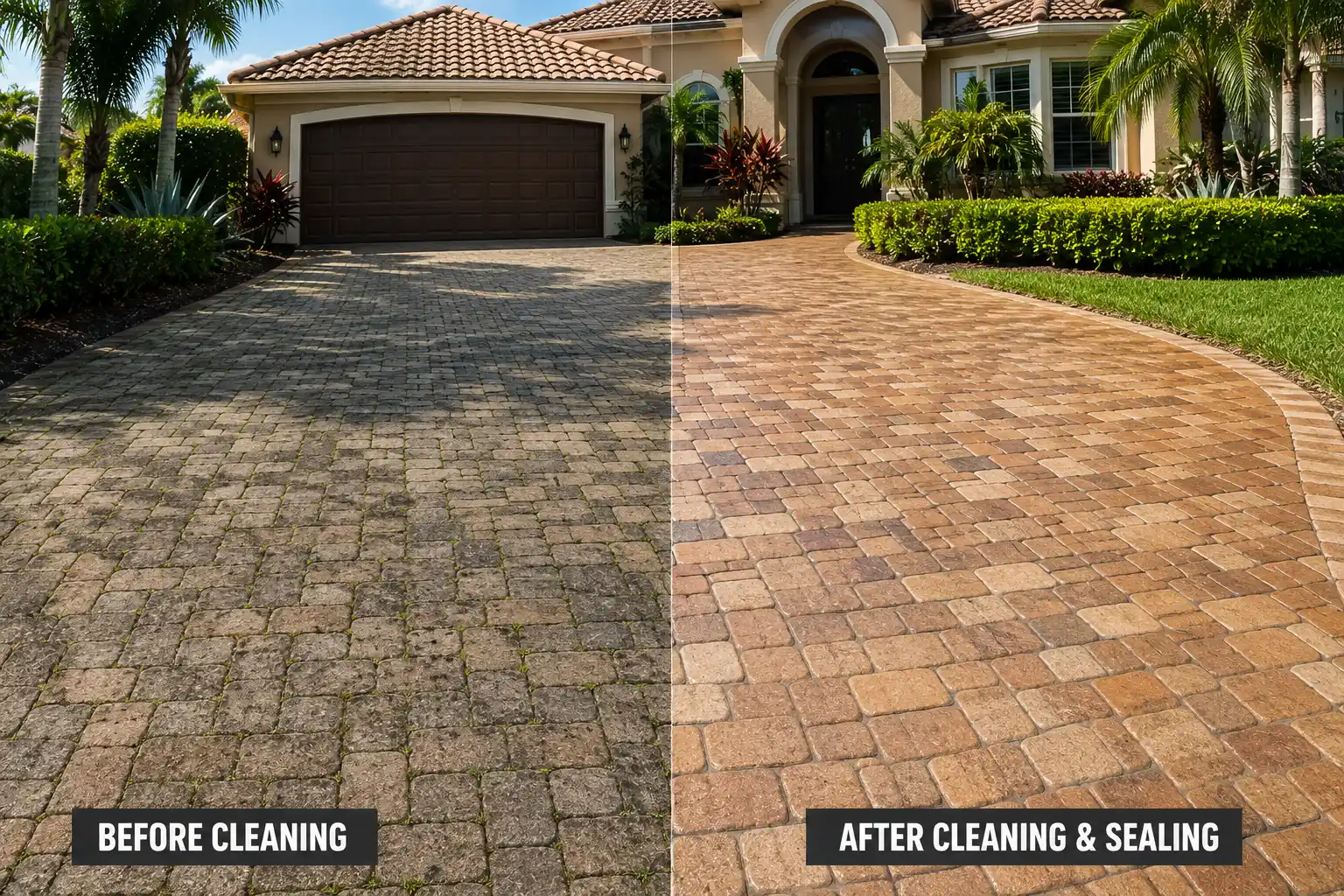
You don’t always have to seal pavers after pressure washing, but sealing can be a valuable next step when you want to protect the surface, stabilize joint sand, enhance the appearance of the pavers, and make future maintenance easier. In Sarasota, Lakewood Ranch, and Wellen Park, paver sealing can be particularly beneficial because driveways, patios, walkways, and pool decks are exposed year-round to Florida sun, rain, humidity, moisture, traffic, and organic growth. The most important factor is making sure the pavers are properly cleaned, prepared, and sufficiently dry before sealer is applied.
Pavers are one of the most attractive exterior features of many Southwest Florida homes.
They’re also a significant investment.
Over time, a beautiful paver driveway or pool deck can become discolored by dirt, algae, weeds, vehicle traffic, weather, and other buildup. Joint sand can be disturbed, and previously sealed pavers may begin to look faded or uneven.
Professional cleaning can dramatically improve their appearance.
But once the pavers are clean, homeowners frequently ask the next question:
Should I have them sealed, too?
The answer depends on the condition of the pavers, whether they’ve previously been sealed, and what you want to accomplish.
What Does Paver Sealer Do?
Paver sealer creates a protective treatment over or within the paver surface that can help reduce water penetration, stabilize joint sand, improve resistance to certain stains, and enhance the appearance of the pavers. The exact results depend on the type of paver, sealer, surface preparation, and application method.
Not every sealer produces the same appearance.
Depending on the product and desired result, sealing can leave pavers looking more natural or can enhance their color.
The important point is that sealer shouldn’t simply be viewed as something that makes pavers shiny.
A properly selected and applied sealer is part of an overall paver maintenance process.
Do Pavers Have to Be Sealed After Pressure Washing?
No. Pavers do not have to be sealed every time they are professionally cleaned. If the goal is simply to remove dirt and organic buildup, cleaning alone may be appropriate. However, if the pavers need joint sand replaced, additional protection, or an enhanced appearance, cleaning followed by proper preparation and sealing may be a better option.
This distinction is important.
Paver cleaning and paver sealing are separate services.
A homeowner may choose cleaning only, or the cleaning may be the first stage of a larger restoration and sealing process.
The existing condition of the surface should determine what happens next.
Why Should Pavers Be Cleaned Before Sealing?
Pavers should be thoroughly cleaned before sealing because dirt, algae, stains, debris, and other contaminants can interfere with the appearance and performance of the finished sealer. Sealing a dirty or poorly prepared surface can trap unwanted discoloration beneath the new treatment.
Surface preparation is one of the most important parts of a successful paver sealing project.
The goal isn’t simply to make the pavers wet and then apply sealer.
Professional preparation may involve addressing:
- Dirt and grime
- Algae and organic growth
- Weeds
- Surface stains
- Existing joint conditions
- Old or failing sealer
- Efflorescence or other surface conditions
- Sand levels
- Moisture
What happens before the sealer is applied can have a major effect on what the finished project looks like.
How Long Should Pavers Dry Before Sealing?
Pavers need to be sufficiently dry before most sealers are applied, but the required drying time depends on the sealer, weather, humidity, surface conditions, and manufacturer’s application requirements. Florida’s humidity and unpredictable rainfall can make proper timing especially important.
This is one reason professional paver sealing isn’t simply a matter of pressure washing in the morning and automatically sealing immediately afterward.
Moisture trapped within or beneath certain sealing products can potentially create appearance problems.
An experienced paver sealing company should consider current and upcoming weather conditions as part of the application process.
What Happens If You Seal Wet Pavers?
Applying certain paver sealers before the surface is sufficiently dry can cause problems such as cloudiness, haziness, whitening, poor adhesion, or an uneven appearance. The specific risks depend on the product being used and the amount of moisture present.
Florida creates an obvious challenge.
A surface may look dry on top while moisture remains within the joints or paver system.
That’s why application conditions and product requirements matter.
The objective shouldn’t be to apply the sealer as quickly as possible. It should be to apply it under appropriate conditions.
Should Joint Sand Be Replaced Before Paver Sealing?
Joint sand may need to be replenished after paver cleaning if existing sand has been lost, displaced, or deteriorated. Proper joint preparation can be an important part of the cleaning and sealing process because the joints help support the paver system.
The amount of work required depends on the existing condition.
Some paver surfaces may have reasonably good joints, while others may have significant sand loss or weed growth.
This is another reason two similarly sized paver driveways may require very different amounts of preparation before sealing.
Does Paver Sealer Help Keep Sand in the Joints?
Certain paver sealing systems can help stabilize joint sand and reduce how easily it is displaced by rain, cleaning, traffic, and other normal conditions. However, sealer isn’t a substitute for properly preparing and filling the joints before application.
If the joints aren’t properly prepared first, simply applying sealer over the surface doesn’t correct the underlying problem.
Cleaning, joint preparation, sanding, and sealing should be viewed as parts of a process when all of those services are required.
Does Paver Sealing Prevent Weeds?
Paver sealing can help reduce conditions that allow weeds to establish in paver joints, particularly when the joints are properly prepared and stabilized. However, no responsible contractor should promise that sealing will permanently eliminate every weed.
Seeds and organic material can eventually find their way into outdoor surfaces.
Florida’s growing conditions don’t disappear because pavers have been sealed.
Proper cleaning, joint preparation, and sealing can make paver maintenance easier, but no outdoor surface becomes permanently maintenance-free.
Does Paver Sealing Prevent Algae?
Paver sealing may make surfaces easier to maintain and can reduce moisture penetration depending on the product, but it cannot permanently prevent algae or other organic growth. Florida’s heat, humidity, rain, shade, and moisture can eventually contribute to new exterior buildup.
This is especially important around pool decks, shaded walkways, and areas near landscaping.
Even properly sealed pavers still require maintenance.
The advantage is that an appropriately sealed and maintained surface may be easier to keep looking its best.
Does Paver Sealer Make the Color Look Better?
Some paver sealers are designed to enhance the natural color of pavers, making faded surfaces appear richer or more vibrant. Other products are intended to provide a more natural appearance, so homeowners should discuss the desired finished look before the sealer is selected.
This is largely a matter of preference.
Some homeowners want their pavers to look similar to how they appear when wet, with deeper and more saturated colors.
Others prefer a subtle, natural finish.
The product should be selected according to both the paver material and the desired appearance.
Does Paver Sealer Make Pavers Shiny?
Not all paver sealers create a glossy finish. Sealers are available with different appearance characteristics, ranging from relatively natural finishes to products that provide greater color enhancement or sheen.
If you don’t want shiny pavers, say so before the project begins.
Likewise, if you’re looking for a richer, enhanced appearance, discuss that with the contractor.
Seeing examples of completed projects can help you communicate the look you prefer.
Can Paver Sealing Help With Stains?
Paver sealing can improve resistance to certain types of staining by reducing how readily some substances penetrate the surface. However, no sealer makes pavers completely stain-proof, and spills should still be addressed promptly.
Driveways can be exposed to:
- Vehicle fluids
- Tire residue
- Leaves
- Landscaping debris
- Irrigation
- Food and beverages
- Dirt
- Organic material
Pool decks and patios face their own types of spills and exposure.
Sealing can provide an additional layer of protection, but routine maintenance is still important.
How Often Should Pavers Be Sealed in Florida?
There is no single resealing schedule that’s correct for every Florida paver surface. How long a sealer lasts depends on the product, surface preparation, amount of traffic, sunlight, weather exposure, moisture, previous treatments, and how the area is maintained.
Instead of automatically resealing according to the calendar, it’s better to evaluate the condition of the existing surface.
A heavily traveled driveway exposed to intense Florida sun may age differently from a covered patio.
Likewise, a pool deck has different environmental conditions from a front walkway.
The surface should tell you more than the calendar.
How Do I Know If My Pavers Need to Be Resealed?
Pavers may be candidates for resealing when the existing sealer has noticeably faded or deteriorated, the surface no longer has the desired appearance, joint conditions have changed, or the pavers have become more difficult to maintain. The existing sealer should be evaluated before another product is applied.
Signs worth evaluating can include:
- Faded appearance
- Uneven finish
- Loss of previous color enhancement
- Joint sand deterioration
- Increased staining
- Visible wear in traffic areas
- Areas where the old sealer appears to be failing
Not every visual problem is solved by adding another coat.
Sometimes additional preparation is required first.
Can You Put New Sealer Over Old Paver Sealer?
Whether new sealer can be applied over existing sealer depends on the condition and type of the previous product and its compatibility with the new sealer. Applying another coating without evaluating the existing surface can lead to an uneven or undesirable result.
This is an important reason to tell your contractor if you know the pavers have previously been sealed.
Even if you don’t know which product was used, an experienced professional can inspect the surface and determine what additional preparation may be necessary.
Why Do Sealed Pavers Sometimes Turn White or Cloudy?
A white, cloudy, or hazy appearance on sealed pavers can be associated with trapped moisture, application conditions, product incompatibility, excessive sealer, or problems with an existing coating. Correcting the issue depends on what caused it.
This is one of the reasons preparation and weather conditions matter so much in Florida.
Simply applying another layer of sealer over a cloudy surface may not solve the problem.
The existing condition should be identified first.
Is Paver Sealing Worth It in Florida?
Paver sealing can be worthwhile for Florida homeowners who want to protect their investment, stabilize joint sand, enhance paver color, improve resistance to certain stains, and make routine maintenance easier. Whether it’s worthwhile for a particular property depends on the condition of the pavers and the homeowner’s goals.
Paver driveways, pool decks, patios, and walkways can represent a substantial part of a home’s exterior appearance.
This is particularly true in communities such as Lakewood Ranch and Wellen Park, where extensive paver installations are common.
Proper maintenance can help preserve the appearance of those outdoor surfaces.
Should You Seal a Paver Driveway?
A paver driveway can be a good candidate for sealing because it experiences vehicle traffic, Florida sunshine, rain, irrigation, dirt, and organic debris. Proper cleaning and preparation should be completed before sealer is applied.
Driveways are also one of the most visible exterior features of a home.
A clean, well-maintained paver driveway can have a significant effect on overall curb appeal.
Should You Seal Pavers Around a Pool?
Pool deck pavers can be sealed, but the product and application should be appropriate for a pool environment. Appearance, surface characteristics, moisture exposure, and slip considerations should all be discussed before selecting a sealer.
Pool decks have different requirements from driveways.
They are regularly exposed to water and barefoot traffic, so choosing the right product and finish matters.
A sealer shouldn’t be selected based solely on how shiny it looks in a photograph.
Does Florida Weather Affect Paver Sealing?
Yes. Florida’s heat, humidity, strong sunshine, frequent rainfall, and moisture can affect both the application process and long-term performance of paver sealer. Weather conditions should be considered when scheduling cleaning and sealing.
Southwest Florida weather can change quickly, particularly during the rainy season.
A professional should account for the manufacturer’s requirements and current conditions rather than forcing an application into an unsuitable weather window.
Professional Paver Cleaning & Sealing in Sarasota, Lakewood Ranch & Wellen Park
Pressure washing can restore the appearance of dirty pavers, but cleaning is only the beginning when your goal is to professionally seal and maintain the surface. Proper preparation, joint conditions, drying, product selection, and application all contribute to the finished result.
Five Star Power Washing Services provides professional paver cleaning and sealing for homeowners throughout Sarasota, Lakewood Ranch, Wellen Park, and surrounding Southwest Florida communities.
We clean and seal paver driveways, pool decks, patios, walkways, entrances, and other outdoor paver surfaces.
If you’re not sure whether your pavers simply need cleaning or would benefit from cleaning and sealing, we can evaluate their current condition and recommend an appropriate approach.
Five Star Power Washing Services also provides house washing, driveway cleaning, roof cleaning and soft washing, pool deck and lanai cleaning, concrete and sidewalk cleaning, gutter cleaning, and professional pressure washing.
Contact Five Star Power Washing Services to request an estimate for professional paver cleaning and sealing in Sarasota, Lakewood Ranch, Wellen Park, or the surrounding area.