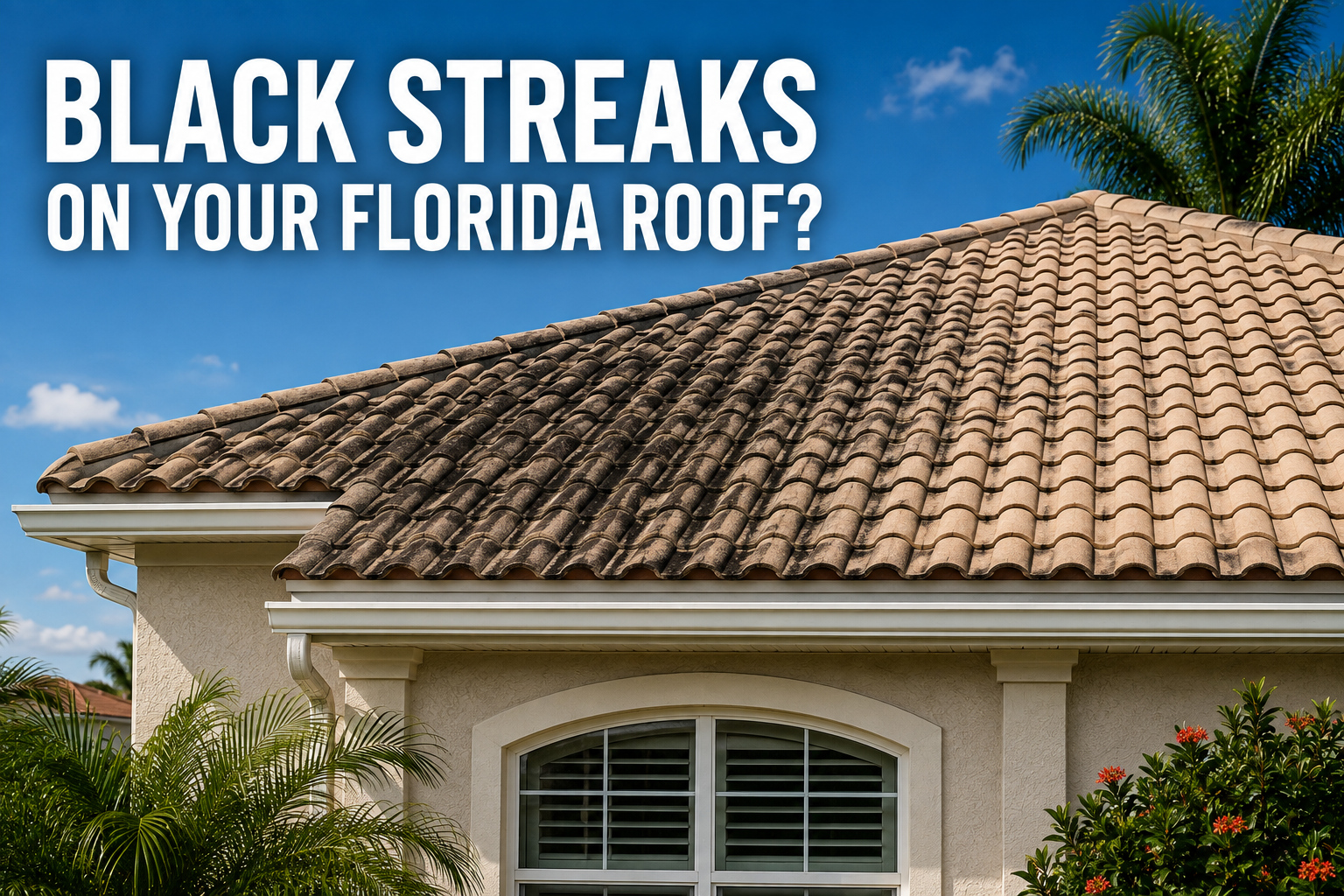
The black streaks commonly seen on roofs in Sarasota, Lakewood Ranch, Wellen Park, and throughout Florida are often caused by a type of algae known as Gloeocapsa magma. Florida’s warm, humid climate creates favorable conditions for this organic growth to develop and spread across roofing surfaces. The streaks can be professionally treated and removed, but roofs should generally be cleaned using an appropriate low-pressure or soft washing process rather than aggressive high-pressure washing.
If you’ve noticed dark streaks gradually spreading across your roof, you’re certainly not the only Florida homeowner dealing with the problem.
What may initially look like dirt, staining, or ordinary weathering can become increasingly noticeable, especially on lighter-colored roofing materials.
Understanding what’s causing the discoloration is important because the solution isn’t necessarily to use more water pressure.
In fact, how a roof is cleaned can be just as important as getting it clean.
What Causes Black Streaks on a Roof?
Black roof streaks are commonly associated with Gloeocapsa magma, a type of cyanobacteria often referred to as blue-green algae. As the growth develops across the roof, it can create the dark streaks and discoloration homeowners commonly notice on roofing materials.
The growth tends to become more visible over time.
Moisture plays an important role, which is one reason roof discoloration is such a common issue in Florida.
Southwest Florida provides many of the conditions organic growth favors:
- Warm temperatures
- High humidity
- Frequent rainfall
- Moisture
- Shade
- Nearby trees and vegetation
- Organic debris
A roof can therefore become visibly discolored even when the rest of the property is well maintained.
Why Are Black Roof Streaks So Common in Florida?
Black roof streaks are common in Florida because the state’s combination of heat, humidity, rainfall, and moisture creates an environment favorable to algae and other organic growth. Roof sections that remain shaded or damp for longer periods may develop discoloration faster than areas receiving more direct sunlight.
This is particularly relevant in Sarasota and Southwest Florida, where warm conditions persist through much of the year.
A roof doesn’t have to be particularly old or neglected to develop visible streaks.
Homes in newer communities such as Lakewood Ranch and Wellen Park can experience roof discoloration as well.
The age of the neighborhood doesn’t eliminate the environmental conditions that contribute to organic growth.
Are Black Streaks on a Roof Mold?
The dark streaks commonly seen on Florida roofs are often algae-related rather than ordinary dirt or what homeowners typically think of as household mold. However, multiple types of organic growth can occur on exterior surfaces, so the roof should be evaluated rather than diagnosed solely by appearance.
Homeowners often use terms such as mold, mildew, algae, moss, and stains interchangeably.
From a cleaning perspective, the important point is that much of this discoloration can be organic growth, not simply loose dirt sitting on top of the roof.
That distinction affects how the roof should be cleaned.
Will Rain Remove Black Streaks From a Roof?
Normal rainfall generally isn’t enough to remove established black roof streaks. Florida roofs receive plenty of rain, yet organic discoloration can continue to develop because moisture itself can contribute to the conditions that allow algae and other growth to thrive.
Waiting for a heavy storm to clean the roof isn’t an effective strategy.
Rain can remove some loose surface debris, but established organic growth typically requires an appropriate cleaning treatment.
Can Black Roof Streaks Be Removed?
Yes. In many cases, black streaks and organic roof discoloration can be professionally treated and removed using a roof-cleaning process appropriate for the roofing material. Professional soft washing uses cleaning solutions and low pressure rather than relying on aggressive high-pressure water to blast the discoloration away.
The objective isn’t simply to make the streaks disappear temporarily.
An appropriate cleaning process addresses the organic material responsible for the visible discoloration while avoiding unnecessary pressure against the roofing surface.
Should You Pressure Wash Black Streaks Off a Roof?
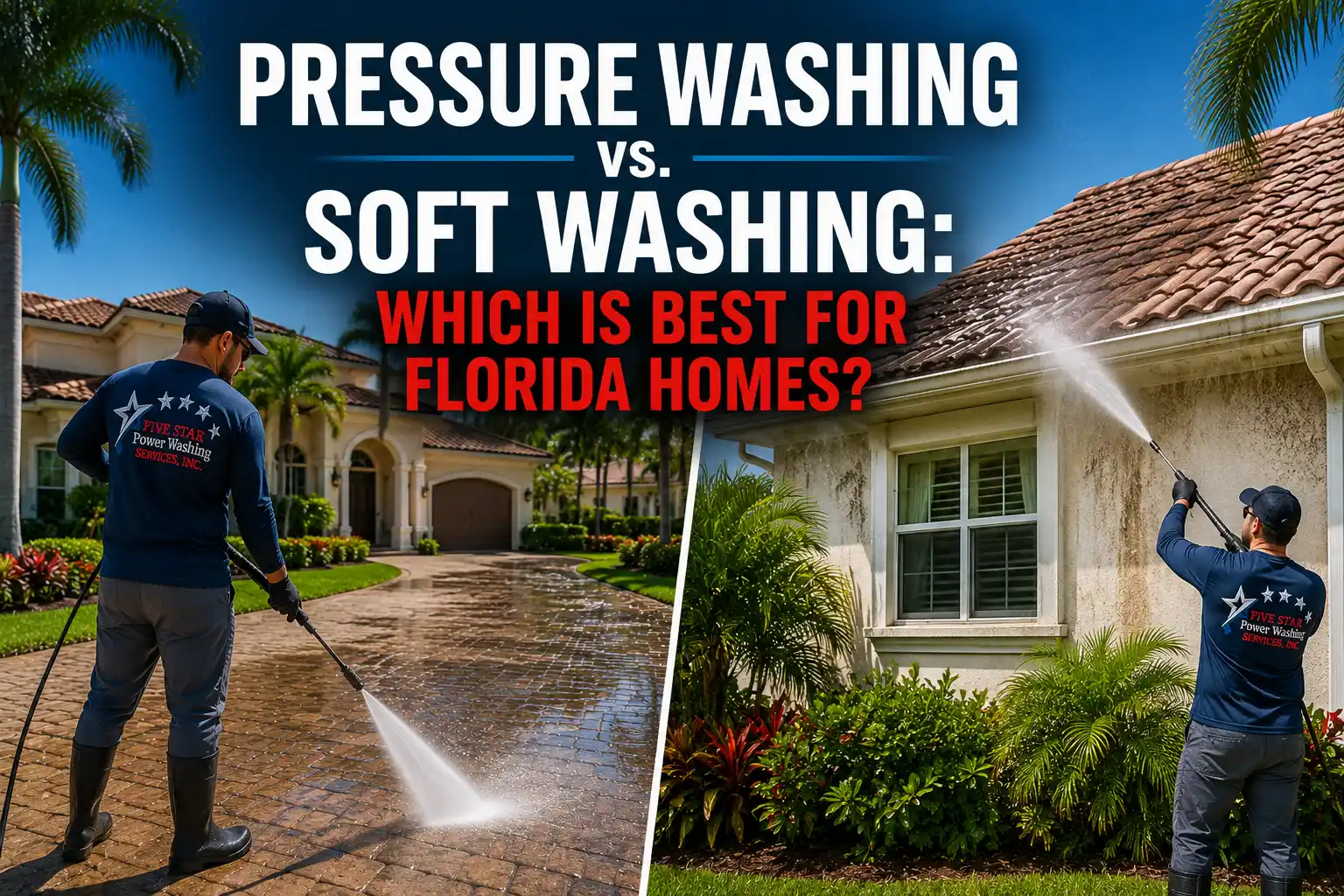
A roof generally should not be cleaned the same way as a concrete driveway. Aggressive high-pressure washing can potentially damage roofing materials, so professional roof cleaning commonly uses a lower-pressure soft washing process instead.
This is one of the most important things Florida homeowners should understand about roof cleaning.
Pressure can be extremely useful on certain durable surfaces.
Your roof is different.
The fact that a pressure washer can physically remove visible discoloration doesn’t mean high pressure is the appropriate cleaning method.
Professional exterior cleaning is about using the right process for the surface, not simply using the most powerful equipment available.
What Is Soft Washing a Roof?
Roof soft washing uses specialized cleaning solutions and low water pressure to treat algae and other organic buildup on roofing materials. The cleaning solution performs much of the work, reducing the need for the aggressive water pressure commonly associated with traditional pressure washing.
This makes soft washing particularly useful for roof cleaning.
A professional roof-cleaning process should consider:
- Roofing material
- Roof condition
- Roof pitch
- Accessibility
- Amount of organic growth
- Gutters and drainage
- Surrounding landscaping
- Nearby exterior surfaces
- Appropriate cleaning solution and application
The exact process can vary depending on the property.
Can You Soft Wash a Tile Roof in Florida?
Yes. Soft washing is commonly used to professionally clean tile roofs in Florida because it can treat organic growth without relying on aggressive high-pressure cleaning. The roof’s condition, tile material, pitch, accessibility, and surrounding property should be evaluated before work begins.
Tile roofs are common throughout Sarasota, Lakewood Ranch, Wellen Park, and other Southwest Florida communities.
They also require appropriate care.
Walking on roofing materials unnecessarily or using inappropriate cleaning techniques can create avoidable risks.
Professional roof cleaning should take both the desired cleaning result and the condition of the roofing system into account.
Can You Soft Wash a Shingle Roof?
Soft washing can also be used for professional shingle roof cleaning because the process relies on cleaning treatment rather than high-pressure water. Asphalt shingles should not simply be blasted with aggressive pressure to remove visible streaks.
Roofing materials are designed to protect the home from weather—not to withstand unnecessary close-range high-pressure cleaning.
If you’re comparing roof-cleaning companies, ask how they intend to clean the roof rather than simply asking whether they can make it look clean.
The method matters.
Can Pressure Washing Damage a Roof?
Yes. Excessive water pressure can potentially damage roofing materials or reduce their useful life. High-pressure cleaning may disturb shingle granules, damage tiles or coatings, and force water into areas where it shouldn’t go.
This doesn’t mean all professional exterior cleaning is dangerous for a roof.
It means the cleaning method should be appropriate.
A reputable company should understand the difference between cleaning durable concrete and cleaning a roofing system.
Do Black Roof Streaks Mean I Need a New Roof?
Black streaks alone do not necessarily mean a roof needs to be replaced. In many cases, the discoloration is associated with organic growth that can be professionally cleaned. However, cleaning cannot repair roofing materials that are already damaged, deteriorated, leaking, or at the end of their useful life.
This distinction can save homeowners unnecessary worry.
An unattractive roof isn’t automatically a failed roof.
At the same time, roof cleaning shouldn’t be presented as a repair for structural or roofing problems.
If there are signs of damage, leaks, broken materials, or other roofing concerns, those issues should be evaluated separately by an appropriate roofing professional.
Are Black Roof Streaks Harmful?
Black streaks indicate that organic growth is present on the roofing surface, but their significance depends on the roofing material, severity, and overall condition of the roof. At a minimum, widespread streaking can substantially affect the appearance of a home.
For many homeowners, curb appeal is the first reason they consider roof cleaning.
A roof represents a large percentage of what you see when looking at a house from the street.
Dark streaks can make an otherwise well-maintained property look older or dirtier than it actually is.
Why Is One Side of My Roof Dirtier Than the Other?
One side of a roof may develop algae and discoloration faster because it receives less sunlight and remains damp longer. Shade from trees, neighboring homes, roof orientation, and surrounding vegetation can also cause different sections of the same roof to develop organic growth at different rates.
This is extremely common.
You may notice that one roof slope is heavily streaked while another remains relatively clean.
That doesn’t necessarily mean something is wrong with one section of the roofing material.
Environmental conditions can simply be different from one side of the house to another.
Do Trees Make Roof Algae Worse?
Trees can contribute to conditions favorable to roof algae by creating shade, reducing how quickly roofing surfaces dry, and depositing leaves and other organic debris. However, homes without significant tree coverage can still develop black roof streaks in Florida’s humid climate.
Trees provide valuable shade and landscaping, so removing them isn’t automatically the solution.
Keeping excessive organic debris from accumulating and addressing roof discoloration when necessary can be part of normal exterior property maintenance.
How Often Should You Clean a Roof in Florida?
There is no single roof-cleaning schedule that’s appropriate for every Florida home. A roof should generally be evaluated for cleaning when noticeable black streaks, algae, or widespread organic discoloration develop rather than automatically cleaned according to a rigid annual schedule.
Cleaning frequency can depend on:
- Roof material
- Amount of shade
- Moisture
- Nearby trees
- Roof orientation
- Surrounding environment
- Previous cleaning
- How quickly organic growth returns
Some roofs will remain clean considerably longer than others.
How Long Does a Roof Stay Clean After Soft Washing?
How long a professionally cleaned roof stays clean depends on environmental conditions around the property. Shade, moisture, trees, roof orientation, weather, and surrounding vegetation can all influence how quickly organic growth eventually returns.
No responsible exterior cleaning company should suggest that a roof can remain permanently free from organic growth.
This is Florida.
The same warm and humid conditions that allowed the growth to develop initially will continue to exist after cleaning.
Professional cleaning resets the condition of the roof; it doesn’t change Southwest Florida’s climate.
Is Roof Soft Washing Safe for Plants and Landscaping?
Professional roof soft washing should include procedures designed to protect landscaping and surrounding exterior areas during the cleaning process. Because roof cleaning involves specialized solutions, vegetation, runoff, gutters, downspouts, outdoor furniture, and nearby surfaces should be considered before work begins.
This is particularly important in Sarasota-area communities where homes often have extensive tropical landscaping immediately around the building.
Property preparation and protection should be part of the cleaning process—not an afterthought.
Can I Remove Black Roof Streaks Myself?
Roof cleaning presents risks that go beyond operating cleaning equipment, including working at height, slippery surfaces, roofing damage, chemical handling, and protecting landscaping and surrounding property. For those reasons, many homeowners choose professional roof cleaning rather than attempting the work themselves.
A wet roof can be extremely slippery.
There’s also a significant difference between cleaning something from ground level and safely working around a roofing system.
Saving money on professional cleaning isn’t worthwhile if the process results in personal injury or property damage.
Will Roof Cleaning Improve Curb Appeal?
Removing widespread black streaks and organic discoloration can significantly improve the appearance of a home because the roof is one of its largest and most visible exterior surfaces. Professional roof cleaning can be particularly worthwhile before selling a home or when the roof makes an otherwise clean property look poorly maintained.
The visual difference can be substantial.
A clean driveway and freshly washed house can still be overshadowed by a heavily streaked roof.
For homeowners preparing to sell, exterior cleaning may also be worth considering before listing photographs are taken.
Professional Roof Cleaning in Sarasota, Lakewood Ranch & Wellen Park
If black streaks are spreading across your roof, they don’t necessarily mean you need a new roof. In many cases, the discoloration can be professionally treated using a soft washing process appropriate for the roofing material.
Five Star Power Washing Services provides professional roof cleaning and soft washing for homeowners throughout Sarasota, Lakewood Ranch, Wellen Park, and surrounding Southwest Florida communities.
We understand that a roof shouldn’t be cleaned like a driveway. Our exterior cleaning approach is based on the surface being treated, the condition of the property, and the appropriate method for removing unwanted buildup.
In addition to roof cleaning, Five Star Power Washing Services provides house washing, driveway cleaning, paver cleaning and sealing, pool deck and lanai cleaning, concrete and sidewalk cleaning, gutter cleaning, and professional pressure washing.
Contact Five Star Power Washing Services to request an estimate for professional roof cleaning in Sarasota, Lakewood Ranch, Wellen Park, or the surrounding area.